

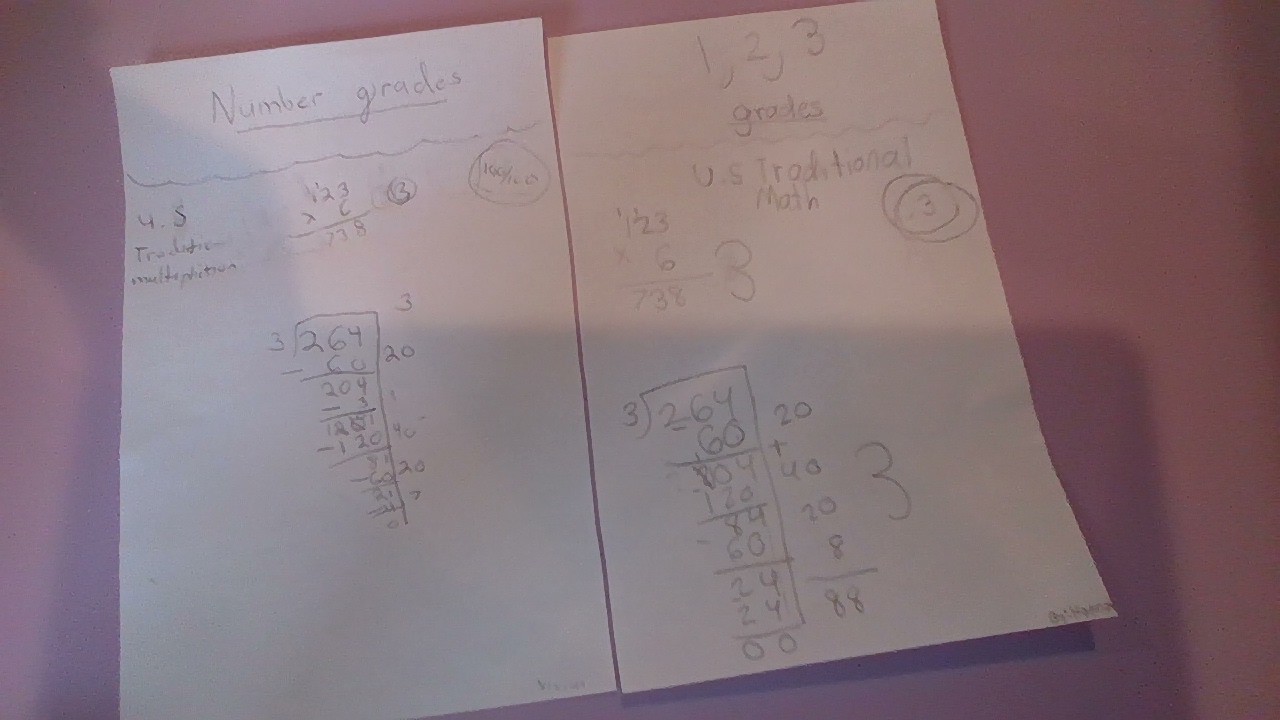
“Number grades are something both parents and teachers have been asking about having on our report cards at Villano,” Principal Jessica Espinoza said. “I am hopeful that number grades will help parents and students understand the student’s progress in school.”
That is one reason why traditional number and letter grades returned to elementary report cards at Patrick M. Villano School in 2025. Number grades show a score out of 100 points. Here is the school grade scale. Proficiencies, on the other hand, describe how well a student meets specific learning goals or standards. Proficiencies are scored as:
1 = not meeting the standard,
2 = approaching the standard,
3 = meeting the standard,
4 = exceeding the standard.
“As stated above, we decided to include number/letter grades because students and families seem to better understand what those grades mean,” Espinoza continued. “So far, students, teachers, and parents seem to respond well to this change.”
Zoe Saudino, a fifth grader, is one of those students.
“The number grade is better than 1, 2, 3 grades because it shows your real grade,” Saudino said. “The biggest challenge of having number grades is that you get to see your real answer and not just an estimate.”
Maeve Graulich, a sixth grader, explains one challenge she has noticed.
“The biggest challenge of having number grades for me is that sometimes it feels more serious to see if you got an A or a D,” Graulich said. “So it is a bit more nerve-wracking because in the younger grades we would just get a 3, 2, or a 1.”
Fifth grade math teacher Christina Rivel said that instead of focusing on points, proficiency levels show specifically what a student can do or understand for each learning standard.
“While number grades give one overall score, proficiencies give more detail about a student’s progress in each skill area,” Rivel explained. “For example, a student might ‘Meet Expectations’ in reading comprehension, but ‘Exceed Expectations’ in writing. It helps teachers, students, and families understand strengths and areas of growth more clearly.”
Both number grades and proficiencies have their benefits, according to Rivel. She said the goal of any grading system is to help students learn, improve, and feel proud of their progress.






Ava Finnerty • Nov 21, 2025 at 2:32 pm
Loved the article!